
Noticias
OpenAI’s educational leader on AI’s ‘Massive Productivity Boost’ for schools, teachers


Class Disrupted Podcast welcomes Siya Raj Purohit to discuss AI’s value in education, while addressing the irreplaceable human element in teaching.
This story first appeared at The 74, a nonprofit news site covering education.
Class Disrupted is an education podcast featuring author Michael Horn and Futre’s Diane Tavenner in conversation with educators, school leaders, students and other members of school communities as they investigate the challenges facing the education system in the aftermath of the pandemic — and where we should go from here. Find every episode by bookmarking our Class Disrupted page or subscribing on Apple Podcasts, Google Play or Stitcher.
In this episode of Class Disrupted, Michael and Diane chat with Siya Raj Purohit, who works on education initiatives at OpenAI, about the transformative potential of AI in education. Siya shares her career journey and how it led her to focus on bridging the gap between education and workforce development. Highlighting the immense value of AI tools like ChatGPT, particularly in university settings, she underscores its potential to personalize learning, reduce teacher burnout and enhance classroom interactions. Siya also addresses concerns around AI by emphasizing that, while AI can elevate thinking and productivity, the irreplaceable human element in teaching — such as mentorship and personal inspiration — remains vital.
Listen to the episode below. A full transcript follows.
Introduction
Michael Horn: Hi there, Michael Horn here. What you are about to hear is a conversation that Diane and I recorded with Siya Raj Purohit from OpenAI as part of our series exploring the potential impact of AI on education from the good to the bad.
Now, here are two things that grabbed me about this episode.
First, I was struck by how much Siya uses ChatGPT in her daily workflow already. Yes, she works at OpenAI, but it has seemingly revolutionized her life. As she said, it’s a massive productivity tool. From using it as a tutor to helping her figure out what projects to prioritize, what to learn, this is just part of how she works now.
Second, I was struck by how much she’s really on the ground level with universities, particularly professors, helping them figure out how to make it part of their workflow as well for teaching and learning, and how deep she is in specific use cases as a result, and how she sees this, frankly, as an important tool to free up teacher time, elevate student thinking, and the like.
As the conversation wrapped up, I’ve also been reflecting on a couple things.
First, what would it take for ChatGPT to be a massive productivity tool for me personally? And if that’s the framing, what does it mean this technology can and can’t be used for in education?
I was also struck by how OpenAI has decided to go deep on supporting those in college and beyond with their tool, but they haven’t yet created their own products or services for students who are under 18. Candidly, that’s not something I had really realized or reflected on before this conversation. So I’m excited to reflect a lot more with Diane after we talk to a number of people about this topic. But for now, we’d love to hear your thoughts about this conversation. Please share it with us over social media or through my website, michaelbhorn.com. And with that as prelude, I hope you enjoy this conversation on Class Disrupted.
The Conversation
Diane Tavenner: Hey, Michael.
Michael Horn: Hey, Diane. Good to see you.
Diane Tavenner: I confess I am really excited about today’s conversation because the first two we’ve had about AI have been super interesting and have been raising some big questions for me around the assumptions that I had coming into these conversations and AI and schools, and in particular how we organize schools themselves around new technologies. But it’s made me even more curious to talk to other people and get other perspectives. So I’m really, really looking forward to talking today.
Michael Horn: As am I, Diane. And I. I agree that the first two episodes have piqued my attention on different things, and I’m looking forward to digging in on more at some point. But whereas our last episode featured someone who is, I think it’s fair to say, largely skeptical about AI, I suspect we will get a very different take today, given our guest actually works on Education at OpenAI, the company that of course developed and operates ChatGPT. Her name is Siya Raj Parohit, and she has been focused on supporting ed tech and workforce development in the startup community and at AWS over the past decade before she more recently joined OpenAI to work specifically on education. We’re going to get to hear about all that up front. But first, Siya, welcome.
Michael Horn: It is so good to have you.
Siya Raj Purohit: Thank you so much for having me.
Michael Horn: Yeah, you bet. So before we get into a series of questions, questions starting to dissect AI and its impact, or not on education, I would just love you to share with the audience a little bit about how you got so deep into AI around the question of education, perhaps specifically, and maybe you’ll also humor me as you do so, because I’m curious OpenAI’s interest in all this because it seems like more than maybe any product launch other than the iPad that I can remember anyway, I can’t think of any other consumer tech product or service that has made education such a cornerstone of all of its announcements and sort of promise and potential for the new technology. So maybe you can tell us a little bit both about your journey, but also how OpenAI sees education.
Siya Raj Purohit: Absolutely. So I’ve spent my career at the intersection of education, technology and workforce development. This all started when I was 18. During college, I published a book about America’s job skills gap, talking about how American universities weren’t teaching the skills that students needed to land jobs in industry. This stemmed from my own experiences and the fear that I may not be able to land the jobs that I aspire to. And that’s something that I think a lot of young adults relate to. But I’ve spent the next 10 years from that just trying to help bridge that gap. I worked at early stage startups, venture capital funds, and most recently Amazon, trying to bridge that gap between learning and opportunity, helping make economic mobility more possible for different types of learners.
Siya Raj Purohit: I joined OpenAI about 8 months ago to help build up our education vertical. As you all might remember. November 2022, ChatGPT launched and suddenly became like such a used product around the world. And what was interesting for OpenAI is that learning and teaching was one of the most common use cases on why people were engaging with ChatGPT. So this year we launched a product called ChatGPT EDU is designed for universities and school districts to be able to use an enterprise grade version of ChatGPT. With that, it brings all sorts of different types of benefits. There are all sorts of network effects that can exist on a campus once all students, faculty and staff have licenses.
Siya Raj Purohit: I will share a couple of examples of what that looks like. But a big part of my job is to help education leaders, educators and students start using AI more effectively on different types of campuses.
Michael Horn: Perfect. Perfect. Go ahead, Diane.
Diane Tavenner: Yeah, I mean, I think it sounds like rightfully so. Michael and I are both operating under the assumption that you’re probably biased towards seeing AI as something that offers real opportunity to improve and transform education. And clearly your personal pathway and journey is leading you to that impact. And so one of the things we’re interested in is having you sort of make the best case for how AI will impact education in a positive way. And we have a lot of things in our minds that we’ve thought about, but we’re really curious to be expanded in our thinking and have you make that very best case for us.
ChatGPT: Revolutionizing Personalized Learning
Siya Raj Purohit: So I believe for education as a sector, personalized learning was always the holy grail. We always said that if we achieve that, we have made it, like we have accomplished a lot of education goals with that. And I think that with ChatGPT, it exists. I have a personalized tutor that I talk to every day. It knows my projects, the skills I’m developing, like my aspirations. And it helps me become a better knowledge worker every day. And I think that in education, it’s making high quality tutoring available to anyone with an Internet connection and supporting educators by automating a lot of the time consuming jobs that they do to let them focus on what matters a lot for them, which is like mentoring and inspiring students.
Diane Tavenner: That’s interesting. Let’s stick on that one for a moment because, and we’ll get to this a little bit later, but like I wonder, does that mean that the schools don’t actually end up changing very much because the tutor and the sort of automated assistant just allow students and teachers to do things the way that they have been doing them, just better and more efficiently? I’m curious what you think about that.
Siya Raj Purohit: So right now the most interesting examples we’re seeing is that educators accrediting ChatGPT for reducing teacher burnout, which as you both know is a big problem in America. Teachers who used to spend so much time doing lesson planning, quiz grading, like all the preparation for classroom activities are able to outsource a lot of that work or kind of use ChatGPT, do a lot of that work. And so then they can focus on those classroom interactions and the engagement within different peers in the classroom, which I think is much more valuable. As far as the classroom dynamics go, I think that it is a big compliment in the way that it brings personalized support and tutoring to individuals. But at the same time I do think that there’s still value in students being grouped with others that are of the same age as them because then you develop a lot of social skills and you learn how to interact more. So I’m not of like mind that like people should just do online school and have ChatGPT because I think that social component is becoming increasingly more important.
Diane Tavenner: Got it. I’m thinking back to your 18-year-old self who wrote a book, which we could spend a lot of time just even talking about that, but having we’ve both written books, we know what it takes. We weren’t writing them at age 18, I don’t think. And your whole premise there that like I’m not learning the skills that I’m going to need to be successful in the jobs that I want to have or the careers I want to have. How do you see AI and what you’re doing with ChatGPT contributing, you know, making that not true or improving that. What is the intersection there of your personal sort of passion?
From Personal Struggle to System Change
Siya Raj Purohit: The reason I wrote that book and I felt so passionately about that and I guess that passion still, like it’s so deep in me is because at first I thought it was a Siya problem. Like Siya was not able to be learning engineering skills to be able to land a job that she wanted. And then I did enough research by speaking with some really accomplished individuals to then realize this was actually a system problem. And the book was like my attempt to capture like the scale of this problem and also prove to myself that this is not just like the thing that I’m struggling with. And then I think the next part of that was like, how can I free other people from the struggle? And that’s when like, this journey to try to make economic mobility more accessible has become like my life passion. So I think with ChatGPT one thing that it does really phenomenally, which I hope the students will take advantage of, is it helps elevate our thinking. A lot of times I share my thoughts on a project and I’m like, how can I elevate my thinking? How would a COO of a rocket ship company approach this? And it helps kind of expand my thought process much more.
Siya Raj Purohit: And I think while doing that, it helps us feel like less alone in a lot of these things that we encounter a lot of the problems because we can find the right examples, we can think bigger about this, we can find our own gaps. And I think these things are very powerful.
Diane Tavenner: Yeah. One of the things that’s interesting about talking to you that I’m observing is when we ask other people to make the best case scenario for AI, it’s a little bit detached from them. But what I hear in you is literally this is what you’re doing. This is how you’re working every day. It sounds like you are a true believer. Am I missing anything or am I hearing that right?
Siya Raj Purohit: I used to work really hard at AWS, but I accomplish about three times more every day at OpenAI just because I have AI now. I use it a lot to up level myself, but also to uplevel the project outcomes I provide.
Diane Tavenner: Interesting. Awesome. Well, this next question might be more challenging for you.
Michael Horn: It’s a massive productivity tool for you. And I’m interested in your book. There’s this common theme, right? You used “me search”, as we would say, not just research around your book. And then you were doing the same thing with this tool because you’re living it in terms of your massive productivity boost. But I guess I’m curious, like the flip side of some of these things because I, you know, there’s a lot of skeptics, as you know about, oh AI might not even just like not have these transformational impacts, but also might undermine certain things. And so I’m sort of curious where you come out on some of this stuff. And I’ll Just name two. And then you can go wherever you want on it.
Class Disrupted Podcast — Ben Riley on why AI doesn’t think like us]
Michael Horn: Which is one, you said in some ways it actually makes you feel like you have a companion alongside of you to elevate your thinking. Some people said that actually could be dangerous because maybe you’ll be in isolation. Right. And not feel like you have to connect with others. And then you talked about elevating thinking. And I think that’s the other big worry that people have is that it’ll actually do the thinking for you. Right. And we won’t do the difficult, effortful work to learn about how to construct an argument and, you know, critical thinking and build knowledge so that we can analyze it and so forth and so on.
Michael Horn: And I’m just sort of curious, like I kind of want you to steel man the argument and make the best skeptics take, but I almost more want you just to start to dig into these different use cases, you’ve heard the ones that I just named and others and sort of talk us through how you think about them
Human Connection in Education
Siya Raj Purohit: Yeah. So let’s first talk about the human connection piece. It’s really interesting because a lot of educators come talk to me about their own doubts and concerns about the future of their profession. They’re like, will I still like be a teacher or educator given that ChatGPT exists and it’s getting so good? And this question honestly surprises me a lot because the reason that I remember educators that have influenced my journey is because of who they were and how they made me feel and who they told me I could become. Right. These are things that ChatGPT doesn’t do, because ChatGPT and AI know about me what I tell it, right? But great mentors can see things about me that I don’t even know about myself. And I think that’s a really important distinction. And I think that educators have this really unique opportunity in this era to double down on those things, they got into teaching to mentor and inspire and find these connections.
Siya Raj Purohit: And now they have the opportunity to do more of that because if they can help increase the potential or vision for more people, that’s the true power of education. I’m really excited about that. And I don’t think that ChatGPT will replace human relationships. I think it’s just gonna become like a support system. So like, the reason, like how I use ChatGPT on my personal career front is that I tell it like the things that I might want to become, like, this is like my 5 year goal, this is my 10 year goal. Can you create a really robust roadmap on how I can get there. And it gives me really, like, precise instructions as I join these types of organizations, publish this type of content, think about taking on these types of projects at work. It’s really detailed.
Siya Raj Purohit: But what it misses out on is, like, when my manager comes in and goes like, hey, this is your superpower. You should double down on this. You know, like, forget, like these type of strategic projects. They just hone in on what makes Siya, Siya. Right. And that’s what we need more people to do for other people.
Michael Horn: Super interesting talk about the other part of this. The you mentioned elevating thinking, giving you a personal roadmap. It’s amazing. Again, the other fear that I hear a lot of is people say, well, it’s actually going to cause people to not do the effortful work to actually learn or even get to the questions that you’re able to ask of it. How do you think about that concern?
[Related: AI pioneers want bots to replace human teachers – Here’s why that’s unlikely]
Siya Raj Purohit: I think educators need to show more about what an extraordinary outcome looks like. And we need to just be able to showcase what amazing end products look like in different verticals and different domains. And the reason for that is that if you give a generic input to ChatGPT, you’ll get a very generic output, which a lot of students are realizing, because they’re just like, okay, I’m going to plug in my homework, get a very generic output, submit that. And that’s not what professors are looking for. So I think one of the most creative use cases I’ve seen is a professor at the Wharton School. He always had an essay as a final submission for his MBA class. And he says, he’s like, what is the value of an essay? The value of an essay is not necessarily in its output, but in the conversational skills and critical thinking skills that go into getting to that output. So now he requires the students use ChatGPT.
Siya Raj Purohit: He’s like, they are going to use it anyway, might as well make it a requirement. And now he measures the number of prompts they use to get to an essay that they’re really satisfied with. Some students are so good at prompt engineering that they take like two or three prompts and they have a really good essay. And some students go back like 18 or 19 times to get to a good essay. And he uses that as their ability to clearly articulate what they’re looking for, which he thinks is a really important skill. So if he can teach students how to communicate those skills, like in terms of communicating that output that they want to see, and also be able to visualize some really extraordinary output, then they’re going to be able to use AI as just a tool to get there.
Michael Horn: So maybe this is the last question in this section that I have because building off that, I think it’s almost an implied set of knowledge and awareness, right, that students need to have as baseline to be able to have those expectations or hopes for outcomes and things of that nature. I’m sort of curious, you also mentioned that what the purpose of an essay is implicit in all of that is that some of the artifacts that we have used historically to gauge, you know, thinking processes and argumentation, et cetera, et cetera, like they might change in the future. Right. The example we’ve used a few times at this point is Brorr Saxberg, one of our friends likes to say Aristotle worried deeply that the written word would mean people didn’t memorize Homeric epic length poems anymore. And he was absolutely true.
Michael Horn: And I don’t think any of us regret that. And so I’m sort of curious, your take of like, you know, sort of how we do work or the artifacts of what we think of as representing learning, how might those change even in the future? And maybe some of these concerns, they won’t all be that relevant because we will show our knowledge and skill development through other means.
Students need human relationships to thrive. Why bots may stand in the way]
Siya Raj Purohit: So I think a lot of like basic calculations, basic strategic work, all of that is going to become much less important. I think a lot of listeners would probably relate when their teachers told them they wouldn’t always have a calculator around, so they needed to learn basic math early. And now we do. So it’s just like these kind of like, the basic elements of strategic thinking, I think are gonna be less important than they used to be. But the things that are going to be more important is like, like critical thinking, but also emotional reasoning and the ability, like emotional intelligence to be able to these outputs and make sure that they match the type of Persona that you’re serving. So right now in my current role, I do a lot of like, I guess, partnerships and BD work and those kind of things. And like, yes, I use AI to create the different types of documents and slides and those kind of like assets that we share. But the way that I communicate them to the end user to kind of inspire confidence or interest is like the unique ingredient here.
Siya Raj Purohit: And we need to be able to teach that. So when the strategic work, as our reasoning models get smarter and do more of that strategic work, that human element helps people distinguish their work and stand out.
Diane Tavenner: Interesting I’m so curious because I think you maybe more than other people have started to maybe personally see some changes happening in schools because of AI and like how it looks different and how it feels different and/or I bet you can imagine them a little bit better than a lot of people. And one of the things that I think we suffer from is just imagination in this space, right? Like we all know what school looks like and we have a really hard time breaking out and imagining something different. So can you just take us there? Like what could possibly look different, feel different for a teacher, for a student in a school? What are you seeing? What are you predicting?
AI Revolutionizing University Experience
Siya Raj Purohit: For this one, I’m going to actually focus more on the university setting because that’s where we’re seeing the fastest changes happen. Our current thinking around what an AI native university looks like is that every campus will have multiple AI touch points across that help enhance the student/faculty/staff experience on campus. So basically the idea is that we’re going to take the knowledge of the campus, make it conversational and more accessible to these users. So when students come on campus, they’re going to have these orientation GPTs which, where they can ask questions like where’s the best pizza place in town? Or how do I change my roommate? Or any of these kind of preterm questions that they have. Then they’re going to come into classrooms where professors will have designed these custom GPTs that are just basically that have learned from the professor’s material and help answer questions. So a professor at HBS, Jeffrey Buskyang, was telling me that most of his class uses custom GPTs between 12am and 3am when like a human tutor is not available. And they can ask questions like which CEOs handle layoffs well and get the exact examples to help understand these kind of concepts. So classroom conversations will become much more in depth because of this.
Siya Raj Purohit: But also students will be able to do things like I have a statistics exam coming up, can you give me some practice quiz questions that relate to the same like level as my professor provides and just be able to go back and forth in classroom content that way. They’ll go to career services where they’ll be able to use the university’s proprietary data to practice interviewing with a McKinsey partner and McKinsey recruiter, all with like AI. So like all of these experiences will happen, student clubs, career services, classrooms, and it’s going to happen seamlessly for students. So they’ll be able to navigate between this very easily as they try to like grow as students and professionals.
Diane Tavenner: Super helpful I want to dig a little bit more and this might be surprising to you, but I actually think a number of people who listen to our podcast, maybe fewer that listen to our podcast, but sort of in education, have literally never even used ChatGPT yet. They haven’t logged into it. So let’s spend just a moment helping them picture what it means to have a GPT. Is it on their phone? Is it on a computer, Is it on a kiosk? What does it literally look like if I’m a student when I’m engaging? And what makes it seamless?
[Related: Case study — How 2 teachers use AI behind the scenes to build lessons & save time]
Siya Raj Purohit: I saw a meme recently which I thought was really funny in Harry Potter and the Chamber of Secrets. Harry starts writing in this diary and it’s like Tom Riddle responding at the other side. But I really liked that example because your first experience of ChatGPT feels similar to that. You just start writing. It’s a blank screen and you have a conversation and it converses back with you. And it’s actually a very magical feeling because you’re able to have conversations with the super intelligence that exists outside of our brains, which is very powerful. So I think that it’s really important to be able to first start having this conversation. You can use chat.com, you can use your mobile app, you can start actually on WhatsApp now or even call in.
Siya Raj Purohit: There’s a 1-800 ChatGPT number. So any of these mediums that make sense for you, you can start and you can ask basic questions. What we see most people do is start with very basic questions and kind of start building up as they gain more confidence in the back and forth interactions of this and then they’re able to do more and more complicated jobs. So how we think about transformation for organizations is the very first step is at an individual level. So when individuals start writing emails better, they start doing better, like project planning or activity building. Then it shifts up to the department level. That’s when people start collaborating together on different projects. One of the best examples I saw of this is that a school district told me it takes 40 people several weeks to assign which class goes into which room on campus.
Siya Raj Purohit: And now ChatGPT can do that in a few minutes. So hugely empowering at the department level. And then finally get to that organization wide level, which is when you’ll have so many different AI touch points and make that experience much easier as you navigate different levels of knowledge on campuses.
Diane Tavenner: I think the other thing that you’re saying that I’m not sure everyone will pick up unless we call it out. So I’m going to ask you to call it out is the reason, this is not like going to be a generic GPT. The intersection with the campus is that you’re actually taking the data and the information and the expertise of the campus and well, you’ll tell me the right words, but like mixing it with the power of GPT to make it sort of a customer customized experience. Did I get that right? What does that look like? What’s going on there?
Siya Raj Purohit: So basically there’s ChatGPT, which is accessible to everyone. Everyone will have slightly different experiences as they go through it, but it’s basically a knowledge base and a conversational platform. Custom GPTs are specific instances of ChatGPT which are basically trained to do very specific tasks. So a professor can be like, this is my six months of curriculum. This is all the case studies I provide. Just reference these when answering all student questions. So now that super intelligence is focused. So it doesn’t like look at the web, it doesn’t research answers, it focuses on the six months of curriculum, goes very deep and helps students be able to learn from that more effectively.
Siya Raj Purohit: And you can use these custom GPT instances for any type of knowledge base. One of my favorite examples of this is that a professor at the University of Maryland told me that they created a custom GPT of themselves. They uploaded about 24, 25 pieces of research work that they’ve done. And like there are different pieces of writing and now they talk to what they call Virtual Dave and get good ideas on what their next research project should be. So it’s like having a thought partner which is only limited to a finite amount of information that you share, but it’s super intelligent itself.
Diane Tavenner: Interesting. And let’s just stay here for one more quick beat because you’re leading us into what, maybe the work looks like for the teacher or the professor, but like just get a little bit more concrete. So that professor literally like copied and pasted his stuff into GPT? Tell it, tell us a little bit about what that, what’s his work now? What’s he doing?
How artificial intelligence could change schools & change how we test students]
Siya Raj Purohit: Yeah, so it takes about 15 minutes to build a custom GPT. You upload PDFs or documents and so you don’t need to copy/paste and you give it instructions. Again, this is where the assistant piece comes in. You explain to the custom GPT what his job is. So in this case, this professor is like, you are going to be my virtual thought partner. As I think about my next research papers. As I think about my next book or my LinkedIn posts, I need you to sound the same as I have in my career so far. So maintain the same tone and professionalism, but help me ideate on what the next iterations of these projects can look like and give me like very honest feedback.
Siya Raj Purohit: So these are the instructions it gave and then the professor just has conversations with it. It’s just like, could I go in this direction? And custom GPT is like, no, it’s a little bit like overdone. Why don’t we look at this path and it just becomes a good like research assistant for you.
Diane Tavenner: Awesome. Michael, here’s the jobs to be done at the moment, I think.
Michael Horn: Seriously, right. What we’re going to flag that for coming back to Diane?
Diane Tavenner: For sure. So let’s now bring in. I promise we will stop really soon as soon that we’re getting to the end here. But I know that OpenAI you think a lot about, you talk a lot about, you focus a lot on policy and you’re engaging with the policy, you know, field and whatnot. You know, what are you learning about the intersection of education policy and policy around AI? Like what, what should we be looking at, looking for, watching out for, paying attention to from your perspective as educators, as people who are leading schools and school systems and universities, you know, what, what do you see coming? What’s important, what should we be thinking about?
Siya Raj Purohit: So right now universities are in a couple of different groups when they’re thinking about AI policy. Some have like very established guidelines and clarity in terms of where AI plays the role in their student journey. So like, I think some of the most forward thinking education leaders that I’m working with are like, okay, like AI is accessible. The cat is out of the bag, it’s going to happen. And now I need to think about how I change my curriculum at the university to be able to use AI and help students prepare for the future. The best examples of this is Harvard Business School, there’s a professor named Jake Cook who teaches a digital marketing course and he’s mapped out what a digital marketing marketer’s journey looks like now in the profession and the seven different jobs that a digital marketer does and where does AI enable each of those jobs? And he’s turned all of his projects,
AI Integration in Education Evolution
Siya Raj Purohit: So now you use AI to do competitive research, AI to create marketing assets and images, AI to help you with the copy and website and all of these kind of elements of what he thinks the students will graduate into the workforce and need to know, and like policies that enable this kind of forward thinking nature are really helpful for students because then they go into Enterprise and have ChatGPT Enterprise and actually are able to use that effectively. And then there are other institutions that I think are still trying to figure it out. They’re concerned about how it might change their former assignments, how they can’t use the same kind of syllabus they might have used in the past years. And a big part of our job right now is to help kind of showcase these examples of the forward thinking institutions and help these other universities learn, kind of grow their own thought process. At the end of the day, universities are the ones best suited to make these decisions for their students because they understand them the best. And it’s so interesting because when you like speak with a state school, you realize they care a lot about like navigation of tools and being able to help students find the right information on a campus that is 50-60,000 students whereas a small liberal arts schools are just like, how can I help the student be able to voice their opinion more effectively? And all of these things have AI solutions. But it’s universities that need to kind of figure out what they want to become and how AI can help with that.
Diane Tavenner: Interesting. I could ask 27 more questions, but I’m going to ask Michael to rein me in and either wrap up with something something or
Michael Horn: No, I think this is super helpful, Siya. I guess my last question is you’re clearly spending a lot of time with colleges and universities. Are there others in the OpenAI team? Are you spending similar amounts of time with K12 institutions or how do you think that’s going to evolve over time? Because clearly it seems like the colleges and universities are, not all as you just said, but many of them are wrestling with this yesterday. Are you seeing similar movement among K12 schools and districts or not? In which case that also tells us something.
Siya Raj Purohit: They have a growing number of K12 customers. But the big caveat is we don’t have an under 18 product right now. So it’s not for students, it’s for like teachers and staff members in K12.
Michael Horn: Gotcha. Okay, super helpful. All right, well let’s maybe wrap up there. Something we love to do, Siya, though, before we let our guests go, is to wonder what else you’re reading or watching or listening to outside of your day jobs. And so maybe ChatGPT has recommended you reading lists or watching lists. But I’m just sort of curious, one thing outside that maybe you could point us to.
Siya Raj Purohit: It’s interesting to say that I’ve actually been asking ChatGPT a lot for book recommendations because I think it’s very magical when you find the right book at the right stage of your life. And I want to see if ChatGPT can help make that happen more often. It’s mixed results so far.
Michael Horn: Okay.
Siya Raj Purohit: One book that I’m reading right now which is super fascinating, it’s called Say It Well, it’s written by one of President Obama’s former speechwriters, and he intertwines, like, how to be a good public speaker with stories from President Obama. And it’s just super fascinating to read about how, like, things that President Obama slipped on in different talks, which make him much more human and accessible, but also like the ways that he thought about providing great speeches and connecting with audiences around the world. So I’m finding the book really interesting so far.
[Related: How AI can help create assessments that enhance opportunities for all students]
Michael Horn: Very cool. What about you, Diane?
Diane Tavenner: Awesome, thanks for sharing Okay. Well, I am going to turn to TV because we’ve been talking so often. I’ve exhausted all the books I’m reading right now, and I’m a little slow on this one, about a year behind. But we just watched the series on FX, Shogun, and I was. I must say, I was a little skeptical going in. I was a young kid when the book came out and then the miniseries on tv, and I was like, there’s no possible way this could be done well or without some real issues.
Diane Tavenner: And you all may know it’s won 18 Emmy awards, the most ever for a single season. It’s truly extraordinary and really thought provoking. Yeah. Highly recommend.
Michael Horn: So I was gonna say, you could imagine it winning awards, but someone who’d read the books being like, it still didn’t quite deliver, but it delivered for you, it sounds like.
Diane Tavenner: Well. And I never read the books or watched the original series.
Michael Horn: Okay. Okay. Okay. So.
Diane Tavenner: But I just had this image in my head, and as I understand it, the current version is very different from the old ones, but it’s. It’s great.
Michael Horn: Very cool. It’s been teasing me for a while, so that is a good endorsement. For mine. I. I guess I, I want to say, like, the NFL football playoffs or Australian Open, but I feel like that gives away when we’re recording, but too late, I’ve given it away. But I’ll give you one other. I’ve actually really been enjoying or I enjoyed because I finished it in a day, a book recommendation that one of my daughters gave me, or she actually ordered me to read it.
Michael Horn: She had finished, it’s called the Girl with the Secret Name by Yael Zoldon. And I’ll apologize if I’ve mispronounced her name. But it’s a historical fiction, takes place during the Spanish Inquisition and it was fascinating. It was a history that I knew at a high level, but not with any depth at all, I will say, like literally zero. And so my daughter was teaching me quite a bit. It was fun. So, that’s mine.
Diane Tavenner: I love when that happens.
Michael Horn: Yeah, no, know you’ve had that experience with Rhett giving you many recommendations. So now maybe this is the first of many for me. But I’ll, let’s, let’s wrap up there, Siya, a huge thank you for joining us for shedding light on this topic, for sharing frankly how you are using it in your daily life to both on your learning journey but also in your work itself on, on a day to day basis. So really appreciate it and we hope you’ll keep staying in touch so we can stay ahead of the curve as well alongside you. But huge thank you. And for all of you tuning in, we will see you next time on Class Disrupted.
***
Class Disrupted is an education podcast featuring author Michael Horn and Futre’s Diane Tavenner in conversation with educators, school leaders, students and other members of school communities as they investigate the challenges facing the education system in the aftermath of the pandemic — and where we should go from here. Find every episode by bookmarking our Class Disrupted page or subscribing on Apple Podcasts, Google Play or Stitcher.
Michael B. Horn, host of The 74’s podcast, Class Disrupted, strives to create a world in which all individuals can build their passions and fulfill their potential through his writing, speaking, and work with a portfolio of education organizations. He is the author of several books, including the award-winning Disrupting Class: How Disruptive Innovation Will Change the Way the World Learns and the recently released From Reopen to Reinvent: (Re)creating School for Every Child. He is also the cofounder of the Clayton Christensen Institute, a nonprofit think tank.
Diane Tavenner, co-host of The 74’s podcast, Class Disrupted, is the co-founder and CEO of Futre.me. Futre is a technology platform helping young people to successfully launch fulfilling lives by guiding them to discover, explore and act. Diane is the author of the best-selling book, Prepared: What Kids Need for a Fulfilled Life.
The 74 is a nonprofit news organization covering America’s education system from early childhood through college and career. The 74 is dedicated to examining the issues impacting the education of America’s 74 million children — and the effectiveness of the system that delivers it. The 74 centers their reporting on the teachers, innovators, researchers, school leaders and politicians who shape that education, sometimes for the better, sometimes for the worse. Their mission is to lead an honest, fact-based conversation about how to give American students the skills, support and social mobility they deserve. Backed by data, investigation, and expertise. Sign up for free newsletters from The 74.


Noticias
Revivir el compromiso en el aula de español: un desafío musical con chatgpt – enfoque de la facultad
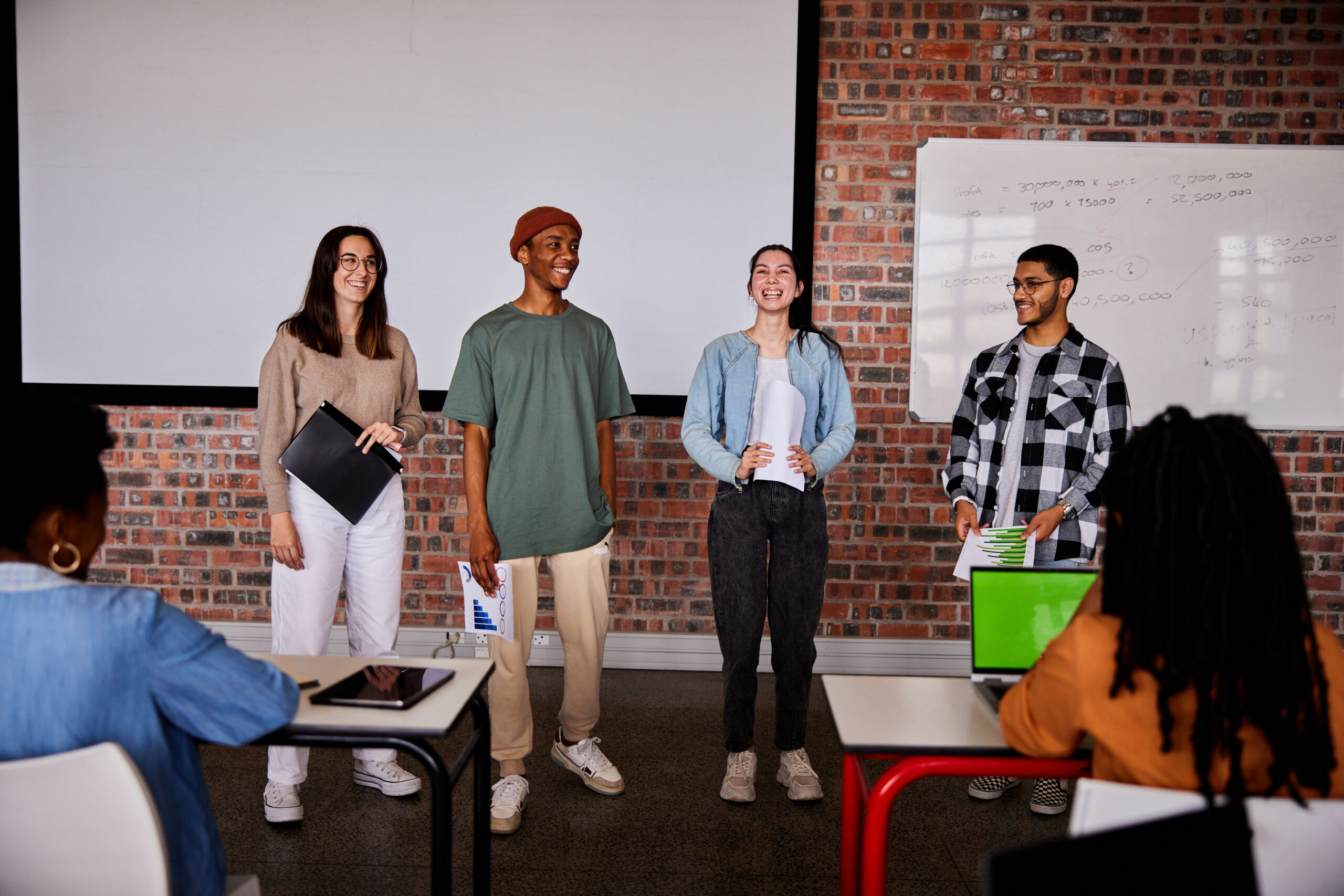


Teen emprendedor que usa chatgpt para ayudarlo con su negocio
El emprendimiento adolescente sigue en aumento. Según Junior Achievement Research, el 66% de los adolescentes estadounidenses de entre 13 y 17 años dicen que es probable que considere comenzar un negocio como adultos, con el monitor de emprendimiento global 2023-2024 que encuentra que el 24% de los jóvenes de 18 a 24 años son actualmente empresarios. Estos jóvenes fundadores no son solo soñando, están construyendo empresas reales que generan ingresos y crean un impacto social, y están utilizando las indicaciones de ChatGPT para ayudarlos.
En Wit (lo que sea necesario), la organización que fundó en 2009, hemos trabajado con más de 10,000 jóvenes empresarios. Durante el año pasado, he observado un cambio en cómo los adolescentes abordan la planificación comercial. Con nuestra orientación, están utilizando herramientas de IA como ChatGPT, no como atajos, sino como socios de pensamiento estratégico para aclarar ideas, probar conceptos y acelerar la ejecución.
Los emprendedores adolescentes más exitosos han descubierto indicaciones específicas que los ayudan a pasar de una idea a otra. Estas no son sesiones genéricas de lluvia de ideas: están utilizando preguntas específicas que abordan los desafíos únicos que enfrentan los jóvenes fundadores: recursos limitados, compromisos escolares y la necesidad de demostrar sus conceptos rápidamente.
Aquí hay cinco indicaciones de ChatGPT que ayudan constantemente a los emprendedores adolescentes a construir negocios que importan.
1. El problema del primer descubrimiento chatgpt aviso
“Me doy cuenta de que [specific group of people]
luchar contra [specific problem I’ve observed]. Ayúdame a entender mejor este problema explicando: 1) por qué existe este problema, 2) qué soluciones existen actualmente y por qué son insuficientes, 3) cuánto las personas podrían pagar para resolver esto, y 4) tres formas específicas en que podría probar si este es un problema real que vale la pena resolver “.
Un adolescente podría usar este aviso después de notar que los estudiantes en la escuela luchan por pagar el almuerzo. En lugar de asumir que entienden el alcance completo, podrían pedirle a ChatGPT que investigue la deuda del almuerzo escolar como un problema sistémico. Esta investigación puede llevarlos a crear un negocio basado en productos donde los ingresos ayuden a pagar la deuda del almuerzo, lo que combina ganancias con el propósito.
Los adolescentes notan problemas de manera diferente a los adultos porque experimentan frustraciones únicas, desde los desafíos de las organizaciones escolares hasta las redes sociales hasta las preocupaciones ambientales. Según la investigación de Square sobre empresarios de la Generación de la Generación Z, el 84% planea ser dueños de negocios dentro de cinco años, lo que los convierte en candidatos ideales para las empresas de resolución de problemas.
2. El aviso de chatgpt de chatgpt de chatgpt de realidad de la realidad del recurso
“Soy [age] años con aproximadamente [dollar amount] invertir y [number] Horas por semana disponibles entre la escuela y otros compromisos. Según estas limitaciones, ¿cuáles son tres modelos de negocio que podría lanzar de manera realista este verano? Para cada opción, incluya costos de inicio, requisitos de tiempo y los primeros tres pasos para comenzar “.
Este aviso se dirige al elefante en la sala: la mayoría de los empresarios adolescentes tienen dinero y tiempo limitados. Cuando un empresario de 16 años emplea este enfoque para evaluar un concepto de negocio de tarjetas de felicitación, puede descubrir que pueden comenzar con $ 200 y escalar gradualmente. Al ser realistas sobre las limitaciones por adelantado, evitan el exceso de compromiso y pueden construir hacia objetivos de ingresos sostenibles.
Según el informe de Gen Z de Square, el 45% de los jóvenes empresarios usan sus ahorros para iniciar negocios, con el 80% de lanzamiento en línea o con un componente móvil. Estos datos respaldan la efectividad de la planificación basada en restricciones: cuando funcionan los adolescentes dentro de las limitaciones realistas, crean modelos comerciales más sostenibles.
3. El aviso de chatgpt del simulador de voz del cliente
“Actúa como un [specific demographic] Y dame comentarios honestos sobre esta idea de negocio: [describe your concept]. ¿Qué te excitaría de esto? ¿Qué preocupaciones tendrías? ¿Cuánto pagarías de manera realista? ¿Qué necesitaría cambiar para que se convierta en un cliente? “
Los empresarios adolescentes a menudo luchan con la investigación de los clientes porque no pueden encuestar fácilmente a grandes grupos o contratar firmas de investigación de mercado. Este aviso ayuda a simular los comentarios de los clientes haciendo que ChatGPT adopte personas específicas.
Un adolescente que desarrolla un podcast para atletas adolescentes podría usar este enfoque pidiéndole a ChatGPT que responda a diferentes tipos de atletas adolescentes. Esto ayuda a identificar temas de contenido que resuenan y mensajes que se sienten auténticos para el público objetivo.
El aviso funciona mejor cuando se vuelve específico sobre la demografía, los puntos débiles y los contextos. “Actúa como un estudiante de último año de secundaria que solicita a la universidad” produce mejores ideas que “actuar como un adolescente”.
4. El mensaje mínimo de diseñador de prueba viable chatgpt
“Quiero probar esta idea de negocio: [describe concept] sin gastar más de [budget amount] o más de [time commitment]. Diseñe tres experimentos simples que podría ejecutar esta semana para validar la demanda de los clientes. Para cada prueba, explique lo que aprendería, cómo medir el éxito y qué resultados indicarían que debería avanzar “.
Este aviso ayuda a los adolescentes a adoptar la metodología Lean Startup sin perderse en la jerga comercial. El enfoque en “This Week” crea urgencia y evita la planificación interminable sin acción.
Un adolescente que desea probar un concepto de línea de ropa podría usar este indicador para diseñar experimentos de validación simples, como publicar maquetas de diseño en las redes sociales para evaluar el interés, crear un formulario de Google para recolectar pedidos anticipados y pedirles a los amigos que compartan el concepto con sus redes. Estas pruebas no cuestan nada más que proporcionar datos cruciales sobre la demanda y los precios.
5. El aviso de chatgpt del generador de claridad de tono
“Convierta esta idea de negocio en una clara explicación de 60 segundos: [describe your business]. La explicación debe incluir: el problema que resuelve, su solución, a quién ayuda, por qué lo elegirían sobre las alternativas y cómo se ve el éxito. Escríbelo en lenguaje de conversación que un adolescente realmente usaría “.
La comunicación clara separa a los empresarios exitosos de aquellos con buenas ideas pero una ejecución deficiente. Este aviso ayuda a los adolescentes a destilar conceptos complejos a explicaciones convincentes que pueden usar en todas partes, desde las publicaciones en las redes sociales hasta las conversaciones con posibles mentores.
El énfasis en el “lenguaje de conversación que un adolescente realmente usaría” es importante. Muchas plantillas de lanzamiento comercial suenan artificiales cuando se entregan jóvenes fundadores. La autenticidad es más importante que la jerga corporativa.
Más allá de las indicaciones de chatgpt: estrategia de implementación
La diferencia entre los adolescentes que usan estas indicaciones de manera efectiva y aquellos que no se reducen a seguir. ChatGPT proporciona dirección, pero la acción crea resultados.
Los jóvenes empresarios más exitosos con los que trabajo usan estas indicaciones como puntos de partida, no de punto final. Toman las sugerencias generadas por IA e inmediatamente las prueban en el mundo real. Llaman a clientes potenciales, crean prototipos simples e iteran en función de los comentarios reales.
Investigaciones recientes de Junior Achievement muestran que el 69% de los adolescentes tienen ideas de negocios, pero se sienten inciertos sobre el proceso de partida, con el miedo a que el fracaso sea la principal preocupación para el 67% de los posibles empresarios adolescentes. Estas indicaciones abordan esa incertidumbre al desactivar los conceptos abstractos en los próximos pasos concretos.
La imagen más grande
Los emprendedores adolescentes que utilizan herramientas de IA como ChatGPT representan un cambio en cómo está ocurriendo la educación empresarial. Según la investigación mundial de monitores empresariales, los jóvenes empresarios tienen 1,6 veces más probabilidades que los adultos de querer comenzar un negocio, y son particularmente activos en la tecnología, la alimentación y las bebidas, la moda y los sectores de entretenimiento. En lugar de esperar clases de emprendimiento formales o programas de MBA, estos jóvenes fundadores están accediendo a herramientas de pensamiento estratégico de inmediato.
Esta tendencia se alinea con cambios más amplios en la educación y la fuerza laboral. El Foro Económico Mundial identifica la creatividad, el pensamiento crítico y la resiliencia como las principales habilidades para 2025, la capacidad de las capacidades que el espíritu empresarial desarrolla naturalmente.
Programas como WIT brindan soporte estructurado para este viaje, pero las herramientas en sí mismas se están volviendo cada vez más accesibles. Un adolescente con acceso a Internet ahora puede acceder a recursos de planificación empresarial que anteriormente estaban disponibles solo para empresarios establecidos con presupuestos significativos.
La clave es usar estas herramientas cuidadosamente. ChatGPT puede acelerar el pensamiento y proporcionar marcos, pero no puede reemplazar el arduo trabajo de construir relaciones, crear productos y servir a los clientes. La mejor idea de negocio no es la más original, es la que resuelve un problema real para personas reales. Las herramientas de IA pueden ayudar a identificar esas oportunidades, pero solo la acción puede convertirlos en empresas que importan.
Precio
ChatGPT y Gemini tienen versiones gratuitas que limitan su acceso a características y modelos. Los planes premium para ambos también comienzan en alrededor de $ 20 por mes. Las características de chatbot, como investigaciones profundas, generación de imágenes y videos, búsqueda web y más, son similares en ChatGPT y Gemini. Sin embargo, los planes de Gemini pagados también incluyen el almacenamiento en la nube de Google Drive (a partir de 2TB) y un conjunto robusto de integraciones en las aplicaciones de Google Workspace.
Los niveles de más alta gama de ChatGPT y Gemini desbloquean el aumento de los límites de uso y algunas características únicas, pero el costo mensual prohibitivo de estos planes (como $ 200 para Chatgpt Pro o $ 250 para Gemini Ai Ultra) los pone fuera del alcance de la mayoría de las personas. Las características específicas del plan Pro de ChatGPT, como el modo O1 Pro que aprovecha el poder de cálculo adicional para preguntas particularmente complicadas, no son especialmente relevantes para el consumidor promedio, por lo que no sentirá que se está perdiendo. Sin embargo, es probable que desee las características que son exclusivas del plan Ai Ultra de Gemini, como la generación de videos VEO 3.
Ganador: Géminis
Plataformas
Puede acceder a ChatGPT y Gemini en la web o a través de aplicaciones móviles (Android e iOS). ChatGPT también tiene aplicaciones de escritorio (macOS y Windows) y una extensión oficial para Google Chrome. Gemini no tiene aplicaciones de escritorio dedicadas o una extensión de Chrome, aunque se integra directamente con el navegador.
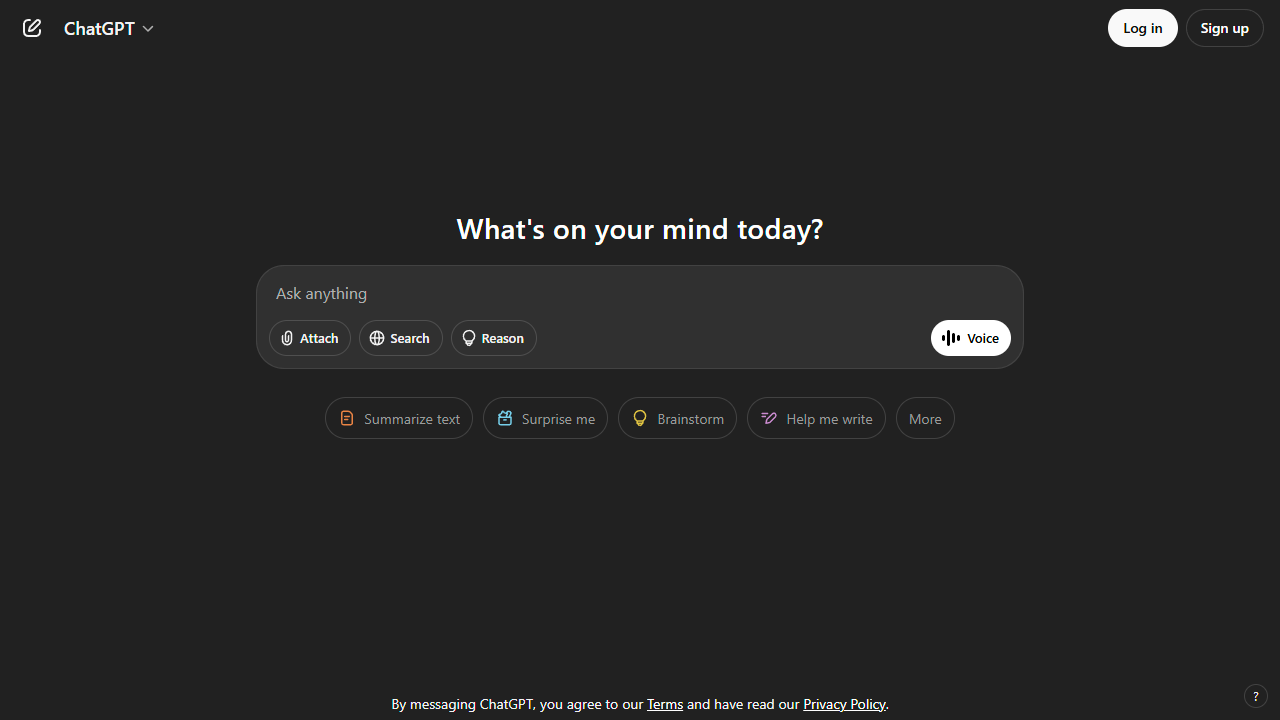
(Crédito: OpenAI/PCMAG)
Chatgpt está disponible en otros lugares, Como a través de Siri. Como se mencionó, puede acceder a Gemini en las aplicaciones de Google, como el calendario, Documento, ConducirGmail, Mapas, Mantener, FotosSábanas, y Música de YouTube. Tanto los modelos de Chatgpt como Gemini también aparecen en sitios como la perplejidad. Sin embargo, obtiene la mayor cantidad de funciones de estos chatbots en sus aplicaciones y portales web dedicados.
Las interfaces de ambos chatbots son en gran medida consistentes en todas las plataformas. Son fáciles de usar y no lo abruman con opciones y alternar. ChatGPT tiene algunas configuraciones más para jugar, como la capacidad de ajustar su personalidad, mientras que la profunda interfaz de investigación de Gemini hace un mejor uso de los bienes inmuebles de pantalla.
Ganador: empate
Modelos de IA
ChatGPT tiene dos series primarias de modelos, la serie 4 (su línea de conversación, insignia) y la Serie O (su compleja línea de razonamiento). Gemini ofrece de manera similar una serie Flash de uso general y una serie Pro para tareas más complicadas.
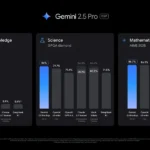
Los últimos modelos de Chatgpt son O3 y O4-Mini, y los últimos de Gemini son 2.5 Flash y 2.5 Pro. Fuera de la codificación o la resolución de una ecuación, pasará la mayor parte de su tiempo usando los modelos de la serie 4-Series y Flash. A continuación, puede ver cómo funcionan estos modelos en una variedad de tareas. Qué modelo es mejor depende realmente de lo que quieras hacer.
Ganador: empate
Búsqueda web
ChatGPT y Gemini pueden buscar información actualizada en la web con facilidad. Sin embargo, ChatGPT presenta mosaicos de artículos en la parte inferior de sus respuestas para una lectura adicional, tiene un excelente abastecimiento que facilita la vinculación de reclamos con evidencia, incluye imágenes en las respuestas cuando es relevante y, a menudo, proporciona más detalles en respuesta. Gemini no muestra nombres de fuente y títulos de artículos completos, e incluye mosaicos e imágenes de artículos solo cuando usa el modo AI de Google. El abastecimiento en este modo es aún menos robusto; Google relega las fuentes a los caretes que se pueden hacer clic que no resaltan las partes relevantes de su respuesta.
Como parte de sus experiencias de búsqueda en la web, ChatGPT y Gemini pueden ayudarlo a comprar. Si solicita consejos de compra, ambos presentan mosaicos haciendo clic en enlaces a los minoristas. Sin embargo, Gemini generalmente sugiere mejores productos y tiene una característica única en la que puede cargar una imagen tuya para probar digitalmente la ropa antes de comprar.
Ganador: chatgpt
Investigación profunda
ChatGPT y Gemini pueden generar informes que tienen docenas de páginas e incluyen más de 50 fuentes sobre cualquier tema. La mayor diferencia entre los dos se reduce al abastecimiento. Gemini a menudo cita más fuentes que CHATGPT, pero maneja el abastecimiento en informes de investigación profunda de la misma manera que lo hace en la búsqueda en modo AI, lo que significa caretas que se puede hacer clic sin destacados en el texto. Debido a que es más difícil conectar las afirmaciones en los informes de Géminis a fuentes reales, es más difícil creerles. El abastecimiento claro de ChatGPT con destacados en el texto es más fácil de confiar. Sin embargo, Gemini tiene algunas características de calidad de vida en ChatGPT, como la capacidad de exportar informes formateados correctamente a Google Docs con un solo clic. Su tono también es diferente. Los informes de ChatGPT se leen como publicaciones de foro elaboradas, mientras que los informes de Gemini se leen como documentos académicos.
Ganador: chatgpt
Generación de imágenes
La generación de imágenes de ChatGPT impresiona independientemente de lo que solicite, incluso las indicaciones complejas para paneles o diagramas cómicos. No es perfecto, pero los errores y la distorsión son mínimos. Gemini genera imágenes visualmente atractivas más rápido que ChatGPT, pero rutinariamente incluyen errores y distorsión notables. Con indicaciones complicadas, especialmente diagramas, Gemini produjo resultados sin sentido en las pruebas.
Arriba, puede ver cómo ChatGPT (primera diapositiva) y Géminis (segunda diapositiva) les fue con el siguiente mensaje: “Genere una imagen de un estudio de moda con una decoración simple y rústica que contrasta con el espacio más agradable. Incluya un sofá marrón y paredes de ladrillo”. La imagen de ChatGPT limita los problemas al detalle fino en las hojas de sus plantas y texto en su libro, mientras que la imagen de Gemini muestra problemas más notables en su tubo de cordón y lámpara.
Ganador: chatgpt
¡Obtenga nuestras mejores historias!

Toda la última tecnología, probada por nuestros expertos
Regístrese en el boletín de informes de laboratorio para recibir las últimas revisiones de productos de PCMAG, comprar asesoramiento e ideas.
Al hacer clic en Registrarme, confirma que tiene más de 16 años y acepta nuestros Términos de uso y Política de privacidad.
¡Gracias por registrarse!
Su suscripción ha sido confirmada. ¡Esté atento a su bandeja de entrada!
Generación de videos
La generación de videos de Gemini es la mejor de su clase, especialmente porque ChatGPT no puede igualar su capacidad para producir audio acompañante. Actualmente, Google bloquea el último modelo de generación de videos de Gemini, VEO 3, detrás del costoso plan AI Ultra, pero obtienes más videos realistas que con ChatGPT. Gemini también tiene otras características que ChatGPT no, como la herramienta Flow Filmmaker, que le permite extender los clips generados y el animador AI Whisk, que le permite animar imágenes fijas. Sin embargo, tenga en cuenta que incluso con VEO 3, aún necesita generar videos varias veces para obtener un gran resultado.
En el ejemplo anterior, solicité a ChatGPT y Gemini a mostrarme un solucionador de cubos de Rubik Rubik que resuelva un cubo. La persona en el video de Géminis se ve muy bien, y el audio acompañante es competente. Al final, hay una buena atención al detalle con el marco que se desplaza, simulando la detención de una grabación de selfies. Mientras tanto, Chatgpt luchó con su cubo, distorsionándolo en gran medida.
Ganador: Géminis
Procesamiento de archivos
Comprender los archivos es una fortaleza de ChatGPT y Gemini. Ya sea que desee que respondan preguntas sobre un manual, editen un currículum o le informen algo sobre una imagen, ninguno decepciona. Sin embargo, ChatGPT tiene la ventaja sobre Gemini, ya que ofrece un reconocimiento de imagen ligeramente mejor y respuestas más detalladas cuando pregunta sobre los archivos cargados. Ambos chatbots todavía a veces inventan citas de documentos proporcionados o malinterpretan las imágenes, así que asegúrese de verificar sus resultados.
Ganador: chatgpt
Escritura creativa
Chatgpt y Gemini pueden generar poemas, obras, historias y más competentes. CHATGPT, sin embargo, se destaca entre los dos debido a cuán únicas son sus respuestas y qué tan bien responde a las indicaciones. Las respuestas de Gemini pueden sentirse repetitivas si no calibra cuidadosamente sus solicitudes, y no siempre sigue todas las instrucciones a la carta.
En el ejemplo anterior, solicité ChatGPT (primera diapositiva) y Gemini (segunda diapositiva) con lo siguiente: “Sin hacer referencia a nada en su memoria o respuestas anteriores, quiero que me escriba un poema de verso gratuito. Preste atención especial a la capitalización, enjambment, ruptura de línea y puntuación. Dado que es un verso libre, no quiero un medidor familiar o un esquema de retiro de la rima, pero quiero que tenga un estilo de coohes. ChatGPT logró entregar lo que pedí en el aviso, y eso era distinto de las generaciones anteriores. Gemini tuvo problemas para generar un poema que incorporó cualquier cosa más allá de las comas y los períodos, y su poema anterior se lee de manera muy similar a un poema que generó antes.
Recomendado por nuestros editores
Ganador: chatgpt
Razonamiento complejo
Los modelos de razonamiento complejos de Chatgpt y Gemini pueden manejar preguntas de informática, matemáticas y física con facilidad, así como mostrar de manera competente su trabajo. En las pruebas, ChatGPT dio respuestas correctas un poco más a menudo que Gemini, pero su rendimiento es bastante similar. Ambos chatbots pueden y le darán respuestas incorrectas, por lo que verificar su trabajo aún es vital si está haciendo algo importante o tratando de aprender un concepto.
Ganador: chatgpt
Integración
ChatGPT no tiene integraciones significativas, mientras que las integraciones de Gemini son una característica definitoria. Ya sea que desee obtener ayuda para editar un ensayo en Google Docs, comparta una pestaña Chrome para hacer una pregunta, pruebe una nueva lista de reproducción de música de YouTube personalizada para su gusto o desbloquee ideas personales en Gmail, Gemini puede hacer todo y mucho más. Es difícil subestimar cuán integrales y poderosas son realmente las integraciones de Géminis.
Ganador: Géminis
Asistentes de IA
ChatGPT tiene GPT personalizados, y Gemini tiene gemas. Ambos son asistentes de IA personalizables. Tampoco es una gran actualización sobre hablar directamente con los chatbots, pero los GPT personalizados de terceros agregan una nueva funcionalidad, como el fácil acceso a Canva para editar imágenes generadas. Mientras tanto, terceros no pueden crear gemas, y no puedes compartirlas. Puede permitir que los GPT personalizados accedan a la información externa o tomen acciones externas, pero las GEM no tienen una funcionalidad similar.
Ganador: chatgpt
Contexto Windows y límites de uso
La ventana de contexto de ChatGPT sube a 128,000 tokens en sus planes de nivel superior, y todos los planes tienen límites de uso dinámicos basados en la carga del servidor. Géminis, por otro lado, tiene una ventana de contexto de 1,000,000 token. Google no está demasiado claro en los límites de uso exactos para Gemini, pero también son dinámicos dependiendo de la carga del servidor. Anecdóticamente, no pude alcanzar los límites de uso usando los planes pagados de Chatgpt o Gemini, pero es mucho más fácil hacerlo con los planes gratuitos.
Ganador: Géminis
Privacidad
La privacidad en Chatgpt y Gemini es una bolsa mixta. Ambos recopilan cantidades significativas de datos, incluidos todos sus chats, y usan esos datos para capacitar a sus modelos de IA de forma predeterminada. Sin embargo, ambos le dan la opción de apagar el entrenamiento. Google al menos no recopila y usa datos de Gemini para fines de capacitación en aplicaciones de espacio de trabajo, como Gmail, de forma predeterminada. ChatGPT y Gemini también prometen no vender sus datos o usarlos para la orientación de anuncios, pero Google y OpenAI tienen historias sórdidas cuando se trata de hacks, filtraciones y diversos fechorías digitales, por lo que recomiendo no compartir nada demasiado sensible.
Ganador: empate
































































































































































































































































































































































































































































































































































































































































































































































































































































































































































































































































































































































































































































































-
 Startups2 años ago
Remove.bg: La Revolución en la Edición de Imágenes que Debes Conocer
-
 Tutoriales2 años ago
Cómo Comenzar a Utilizar ChatGPT: Una Guía Completa para Principiantes
-
 Startups2 años ago
Deepgram: Revolucionando el Reconocimiento de Voz con IA
-
 Startups2 años ago
Startups de IA en EE.UU. que han recaudado más de $100M en 2024
-
 Recursos2 años ago
Cómo Empezar con Popai.pro: Tu Espacio Personal de IA – Guía Completa, Instalación, Versiones y Precios
-
 Recursos2 años ago
Perplexity aplicado al Marketing Digital y Estrategias SEO
-
 Estudiar IA2 años ago
Curso de Inteligencia Artificial Aplicada de 4Geeks Academy 2024
-
 Noticias2 años ago
Dos periodistas octogenarios deman a ChatGPT por robar su trabajo