
Noticias
Explaining The Inexplicable Mystery Of Why ChatGPT O1 Suddenly Switches From English To Chinese When Doing AI Reasoning


Every AI mystery deserves a logical plausible explanation, including the latest one about OpenAI’s … [+]
In today’s column, I aim to resolve the AI mystery floating around on social media and in the mainstream news regarding OpenAI’s ChatGPT o1 advanced AI model suddenly switching momentarily from working in English to working in Chinese. In case you haven’t heard about this surprising aspect, users have been posting tweets showcasing o1 doing just that. The AI is solving a user-entered prompt and while presenting the logical steps the language shifts from English to Chinese. This occurs for a line or two and then reverts back to English.
Is it some kind of tomfoolery? Hacking? Maybe the AI is going off the deep end? Lots of postulated theories and wild conjectures have been touted.
Let’s talk about it.
This analysis of an innovative AI breakthrough is part of my ongoing Forbes column coverage on the latest in AI including identifying and explaining various impactful AI complexities (see the link here). For my coverage of the top-of-the-line ChatGPT o1 model and its advanced functionality, see the link here and the link here.
What’s Going On With o1
Allow me to set the stage for revealing the known facts concerning the mystery that is afoot.
ChatGPT o1 generative AI is a large language model (LLM) that generally rates as being at or quite near the pinnacle of modern-day AI models. There are plentiful advances jammed into o1. When you use o1, you can immediately discern that the AI has something special going on. Happy face.
To be clear, o1 and none of the current time AI is sentient, nor have we reached artificial general intelligence (AGI). If you are interested in where we are related to achieving AGI and also the vaunted artificial superintelligence (ASI), see my analysis at the link here. At this time, generative AI and LLMs are based on human-devised mathematical and computational pattern matching that in large do an amazing job of mimicking human writing and conversation.
Those who have been using o1 now for several months would likely say that they relish doing so. It does its job. You enter a prompt; you get a reply. One nice twist to o1 is that the reply customarily includes a listing of the steps that the AI took to arrive at the answer presented. This is commonly known as chain-of-thought (CoT), see my detailed explanation at the link here, consisting of a series of delineated steps of the internal processing by the AI.
So far, so good.
Now for the mystery. Various users have indicated that from time to time the o1 suddenly switches from English to Chinese when displaying the chain-of-thought steps that are being undertaken. Just as quickly, the portrayal shifts again back to English. It is almost like seeing a mirage, except that it really does happen, and printouts or screen snapshots bear this out.
Are people’s eyes deceiving them?
Nope, the accounts of this happening are verifiable and not merely fancy.
Explanations Are Over-The-Top
OpenAI seems to have remained mum and isn’t telling us what is at the root of this oddity. Their AI is considered proprietary, and they don’t allow others to poke around into the internals, nor do they make publicly available the internal design and mechanisms at play. This means that everyone can only guess what the heck might be happening inside o1.
Into this vacuum has rushed a slew of quite wild suggestions.
Some of the nuttiest conjecture postulates that the Chinese have taken over o1 or perhaps are secretly running OpenAI. Another equally outlandish idea is that a Chinese hacker has planted something into o1 or has accessed a secret backdoor. On and on these conspiracy-oriented theories go. Social media has an overworked imagination, indubitably.
I am going to categorically reject those zany schemes.
Why so?
Know this — the same overall issue of switching out of English has been documented by others and includes instances of switching to German, French, Portuguese, and so on. The gist is that the Chinese language is not the sole purveyor of the grand switcheroo. Other languages are momentarily displayed, beyond just Chinese.
Perhaps I find myself out on a limb, but I seriously doubt that an entire cabal of earthly hackers or numerous countries across the globe are all sneakily putting their hands into the internals of o1. My viewpoint is that there is something more straightforward that can explain the multitude of sudden language appearances.
Laying Out A Reasonable Guess
I will share with you my theory or educated guess at what might be occurring. Don’t take this to the bank. There are lots of technical reasons that something like this can take place. Let’s go with one that I think is plausible, makes abundant sense, and fits with the reported facts.
Is it the winner-winner chicken dinner?
I can’t say for sure since the AI is proprietary and the AI isn’t open for inspection.
Put on your Sherlock Holmes cap and go along for a fascinating journey into the guts of contemporary generative AI and LLMs.
Leaning Into The Core
When generative AI and LLMs are initially put together, the big first step entails scanning lots of data to do pattern-matching on how humans write. All kinds of essays, narratives, stories, poems, and the like are examined. Complex mathematical and computational mechanisms try to identify how words relate to other words.
This is coined as a large language model due to being undertaken in the large, such as scanning millions upon millions of materials on the Internet. Without the largeness, we wouldn’t have the fluency that is currently exhibited by LLMs (for those interested in SLMs, small language models, I showcase how they differ from LLMs, at the link here).
I’ll use a simple example that will gradually aid in unraveling the mystery.
The Word “Dog” Comes To Mind
Consider the word “dog” as a commonplace word that readily would be scanned when examining content on the Internet. We can assume that “dog” is immensely across the web as a word that people use. That’s a no-brainer assumption. Everyone has a beloved dog, or a story about dogs, or has something to say about dogs. Humankind pretty much loves dogs.
If you were to detect which other words appear to be associated with the word “dog” what comes to mind?
Some obvious ones might be fluffy, four-legged, tail-wagging, etc.
From the perspective of what is taking place inside the AI, the word “dog” is associated mathematically and computationally with the words “fluffy”, “four-legged”, “tail-wagging” and so on. The words themselves have no meaning. They are each a jumble of letters. The word “dog” consists of the letter “d” followed by the letter “o” and followed by the letter “g”.
You should think of the word “dog” as just a bunch of letters, collected together, and we will treat that collection of letters as a kind of blob. The blob of the letters in “dog” is statistically associated with the blobs of the word consisting of the letters “fluffy”.
My aim here is to have you disassociate in your mind that the word “dog” has any meaning, such as images in your head of this or that favored dog. Instead, the word “dog” is a collection of letters and is associated with lots of other collections of letters that form other words.
The French Word For Dog
Shifting gears, I will pick a language other than English to set up the reveal that will be momentarily discussed.
I lived in France for a while and love the French language, though I admit I am extremely rusty and would never even attempt to speak French aloud. Anyway, if it’s Ok with you all, I will envision that we are interested in the French word for “dog” (which is going to be easier as a language choice than picking a Chinese word, due to the symbols used in Chinese writing, but the underlying precept is going to be the same).
There is a French masculine version, “chien” and a feminine version, “chienne” for dog, but let’s simplify things and go with just using for the sake of discussion word “chien” (thanks for playing along).
If you don’t know French, and if I showed you the word “chien”, I’d bet that you wouldn’t know what the word means.
This makes sense that you wouldn’t know. For example, the word “dog” has the letters “d”, “o”, and “g”, but none of those letters exist in the word “chien”. The French word for dog doesn’t seem to resemble the English word for dog. You are unable to readily figure out that they are essentially both the same words in terms of what they signify.
Dog And Chien Have Roughly The Same Factors
Suppose we went ahead and did a scan on the Internet to find the word “chien” and identify other words that seem statistically related to that word.
What would we find?
The odds are that you would see that “chien” is associated with the words fluffy, four-legged, tail-wagging, and the like.
And what could you therefore say about the word “dog” versus the word “chien”?
Well, both of those words are associated with roughly the same set of other words. Since they are nearly associated overwhelmingly with the same set of other words, we could reasonably conclude that both those words probably have the same assorted meaning. They are two peas in a pod.
The crux is that the word “dog” and the word “chien” can be treated as the same, not because you and I in our heads know them to refer to the same thing, but because they both point to other associated words that are approximately the same set of other words.
LLMs Pickup Other Languages When Data Training
The deal is this.
When doing the initial data training of generative AI and LLMs, the widespread scan of the Internet is usually aimed primarily at English words (kind of, that’s true of English-oriented LLMs for which English-speaking AI developers tend to build). During my talks about AI, attendees are often shocked to learn that while the data training is taking place, there are bits and pieces of other languages getting scanned too.
This is more incidental than purposeful. You can see why. The scanning is moving from website to website, and sometimes there might be content in something other than English, maybe just a page here or there. The chances are pretty high that the scanning is going to eventually touch on a wide array of languages other than English, such as French, German, Chinese, etc. Not at a full clip, just on a random wanton basis.
What does the AI do with those said-to-be foreign words?
If it was you or me, and we were trying to read all kinds of websites, the moment you hit upon a page that had something other than English, you might be tempted to set aside the verbiage. You might be thinking that since your principal pursuit is English, discard anything that isn’t English.
The usual approach with AI is that the AI developers just let whatever language is encountered be encompassed by scanning and pattern-matching. No need to try and kick it out. Just toss it into the pile and keep churning.
This produces an exciting and quite intriguing outcome, keep reading.
Bringing The Dog Back Into The Picture
Imagine that an Internet scan is taking place, and the word “dog” is encountered. Later, the words “fluffy”, “four-legged”, “tail-wagging” and others are found and determined to be statistically related to the word “dog”.
The same might happen with the word “chien”.
Then, the AI mathematically and computationally construes that “dog” and “chien” appear to be referencing the same thing. It is almost as though the AI crafts an internal English-French dictionary associating English words with French words.
The downside is that since that wasn’t the main goal, and since the volume and variety of French words encountered might be relatively slim, this English-French dictionary is not necessarily going to be complete. Gaps might readily exist.
Various AI research studies have shown that English-focused LLMs often end up being able to readily switch to using other languages that have been previously scanned during data training, see my analysis at the link here. The phenomenon is an unintended consequence and not particularly planned for. Also, the switching is not necessarily going to be fluent in the other language and might be flawed or incomplete.
You can likely envision the surprise by AI developers that their LLM suddenly was able to spout a different language, such as French or Chinese. Their first thought was heck, how did that happen? Researchers eventually found that the smattering of any other language that was encountered can lead to the AI devising a multi-lingual capacity, of sorts, in a somewhat mechanical way.
Mystery Part 1 Is Explained
Returning to the mystery at hand, how is it that o1 can suddenly switch to Chinese, French, German, or whatever other language beyond English?
The answer is straightforward, namely, the AI picked up an informal smattering of those languages during the initial data training.
Boom, drop the mic.
Whoa, you might be saying, hold your horses. It isn’t just that o1 displays something in a language other than English, it is also that it suddenly does this seemingly out of the blue.
What’s up with that?
I hear you.
We need to resolve that second part of the mystery.
When Something Points To Something Useful
Go with me on a handy thought experiment.
Free your mind. Throughout all the instances of the English word “dog”, suppose that at no point did we encounter the word “whisper” while scanning the Internet. Those two words never came up in any connected way. Meanwhile, imagine that the French word “chien” at times was statistically found to connect with the word “whisper”. Please don’t argue the point, just go with the flow. Be cool.
Here’s the clever part.
When AI is computationally trying to solve a problem or answer a question, the internal structure is typically being searched to find a suitable response.
Pretend I typed this question into generative AI.
- My entered prompt: “Can a dog whisper?”
The AI searches throughout the internal structure.
There aren’t any patterns on the word “dog” and the word “whisper”. Sad face.
But remember that we have the word “chien” exists in there too, plus we had found that “chien” has an association with the word “whisper”. That’s good news, due to the AI associating “dog” and “chien” as essentially the same words, and luckily the word “chien” is associated with the word “whisper”.
Stated overtly, you might remember those days of algebra where they kept saying if A is to B, and if B is to C, then you can reasonably conclude that A is to C. Remember those rules of life? Nifty. Here, in essence, “dog” is to “chien”, while “chien” is to “whisper”, and thus we can say that “dog” is also to “whisper”. Logic prevails.
The AI is going to be able to answer the question, doing so by accessing the French words that perchance were picked up during the initial data scanning.
Internally, suppose the AI has this sentence that it composes: “Oui, un chien peut chuchoter.” That is generally French for saying that yes, a dog can whisper.
An answer was generated, scoring a victory for generative AI, but we need to do a little bit more sleuthing.
Final Twist That Deals With Displaying Results
Would you be likely to normally see a French sentence as a displayed response when using an English-focused LLM?
No. Not if you are using an English-language-based LLM that is set to show principally English responses, and if you haven’t explicitly told the AI to start displaying in French (or whatever language). The AI might have the French sentence internally stored and then convert the French sentence over into English to display the English version to you.
That’s our final twist here.
Remember that the report by users is that the language switcheroo only seems to happen when the chain of thought is underway. The chances are that language switching isn’t necessarily active for the chain-of-thought derivations. It is activated for the final response, but not the intervening lines of so-called reasoning.
This also explains why the AI suddenly switches back out of the other language and continues forward in English thereafter.
The basis for doing so is that English in this case is the predominant form of the words that were patterned on. The switch to French was merely to deal with the “whisper” resolution in this instance. Once that happened, and if the prompt or question had other parts to it, the AI would simply resume with the English language for the rest of the way.
Boom, drop the mic (for real this time).
The Logical Explanation Is Satisfying
In recap, most generative AI and LLMs tend to pick up words of other languages beyond English during the initial data training and scanning of the Internet. Those words enter the massive statistical stew.
They are considered fair game for use by the AI.
If those non-English words are going to be helpful during generating a response to a user prompt, so be it. As they say, use any port in a storm. The AI is programmed to seek a response to a user inquiry and spanning across languages is easy-peasy. It might also be flawed, depending on how much of any other respective languages were involved in the data training.
A significant clue of the o1 mystery is that the reported instances are infrequent and only seem to arise in the chain-of-thought. This can be linked to the notion that while the AI is composing a response, there isn’t a need to convert from a non-English language to English. Those are just intermediary steps that are merely grist for the mill. The AI doesn’t have any computational need to convert them from one language to another.
Once a final result is ready, only then would a language conversion be warranted.
That is then one reasonably sensible and altogether logical reason for resolving the mystery. Of course, I had mentioned at the get-go that there are other logical possibilities too. I just wanted to share an explanation that seems to cover the proper bases. Now then, some might be tempted to reject the logic-based route entirely and argue for something more sinister or incredible, perhaps ghosts hiding inside o1 or the AI is starting to take on a life of its own. Imagine all the wild possibilities.
Let’s end with a final thought expressed by the great Albert Einstein: “Logic will get you from A to B. Imagination will take you everywhere.”

Noticias
Revivir el compromiso en el aula de español: un desafío musical con chatgpt – enfoque de la facultad



Teen emprendedor que usa chatgpt para ayudarlo con su negocio
El emprendimiento adolescente sigue en aumento. Según Junior Achievement Research, el 66% de los adolescentes estadounidenses de entre 13 y 17 años dicen que es probable que considere comenzar un negocio como adultos, con el monitor de emprendimiento global 2023-2024 que encuentra que el 24% de los jóvenes de 18 a 24 años son actualmente empresarios. Estos jóvenes fundadores no son solo soñando, están construyendo empresas reales que generan ingresos y crean un impacto social, y están utilizando las indicaciones de ChatGPT para ayudarlos.
En Wit (lo que sea necesario), la organización que fundó en 2009, hemos trabajado con más de 10,000 jóvenes empresarios. Durante el año pasado, he observado un cambio en cómo los adolescentes abordan la planificación comercial. Con nuestra orientación, están utilizando herramientas de IA como ChatGPT, no como atajos, sino como socios de pensamiento estratégico para aclarar ideas, probar conceptos y acelerar la ejecución.
Los emprendedores adolescentes más exitosos han descubierto indicaciones específicas que los ayudan a pasar de una idea a otra. Estas no son sesiones genéricas de lluvia de ideas: están utilizando preguntas específicas que abordan los desafíos únicos que enfrentan los jóvenes fundadores: recursos limitados, compromisos escolares y la necesidad de demostrar sus conceptos rápidamente.
Aquí hay cinco indicaciones de ChatGPT que ayudan constantemente a los emprendedores adolescentes a construir negocios que importan.
1. El problema del primer descubrimiento chatgpt aviso
“Me doy cuenta de que [specific group of people]
luchar contra [specific problem I’ve observed]. Ayúdame a entender mejor este problema explicando: 1) por qué existe este problema, 2) qué soluciones existen actualmente y por qué son insuficientes, 3) cuánto las personas podrían pagar para resolver esto, y 4) tres formas específicas en que podría probar si este es un problema real que vale la pena resolver “.
Un adolescente podría usar este aviso después de notar que los estudiantes en la escuela luchan por pagar el almuerzo. En lugar de asumir que entienden el alcance completo, podrían pedirle a ChatGPT que investigue la deuda del almuerzo escolar como un problema sistémico. Esta investigación puede llevarlos a crear un negocio basado en productos donde los ingresos ayuden a pagar la deuda del almuerzo, lo que combina ganancias con el propósito.
Los adolescentes notan problemas de manera diferente a los adultos porque experimentan frustraciones únicas, desde los desafíos de las organizaciones escolares hasta las redes sociales hasta las preocupaciones ambientales. Según la investigación de Square sobre empresarios de la Generación de la Generación Z, el 84% planea ser dueños de negocios dentro de cinco años, lo que los convierte en candidatos ideales para las empresas de resolución de problemas.
2. El aviso de chatgpt de chatgpt de chatgpt de realidad de la realidad del recurso
“Soy [age] años con aproximadamente [dollar amount] invertir y [number] Horas por semana disponibles entre la escuela y otros compromisos. Según estas limitaciones, ¿cuáles son tres modelos de negocio que podría lanzar de manera realista este verano? Para cada opción, incluya costos de inicio, requisitos de tiempo y los primeros tres pasos para comenzar “.
Este aviso se dirige al elefante en la sala: la mayoría de los empresarios adolescentes tienen dinero y tiempo limitados. Cuando un empresario de 16 años emplea este enfoque para evaluar un concepto de negocio de tarjetas de felicitación, puede descubrir que pueden comenzar con $ 200 y escalar gradualmente. Al ser realistas sobre las limitaciones por adelantado, evitan el exceso de compromiso y pueden construir hacia objetivos de ingresos sostenibles.
Según el informe de Gen Z de Square, el 45% de los jóvenes empresarios usan sus ahorros para iniciar negocios, con el 80% de lanzamiento en línea o con un componente móvil. Estos datos respaldan la efectividad de la planificación basada en restricciones: cuando funcionan los adolescentes dentro de las limitaciones realistas, crean modelos comerciales más sostenibles.
3. El aviso de chatgpt del simulador de voz del cliente
“Actúa como un [specific demographic] Y dame comentarios honestos sobre esta idea de negocio: [describe your concept]. ¿Qué te excitaría de esto? ¿Qué preocupaciones tendrías? ¿Cuánto pagarías de manera realista? ¿Qué necesitaría cambiar para que se convierta en un cliente? “
Los empresarios adolescentes a menudo luchan con la investigación de los clientes porque no pueden encuestar fácilmente a grandes grupos o contratar firmas de investigación de mercado. Este aviso ayuda a simular los comentarios de los clientes haciendo que ChatGPT adopte personas específicas.
Un adolescente que desarrolla un podcast para atletas adolescentes podría usar este enfoque pidiéndole a ChatGPT que responda a diferentes tipos de atletas adolescentes. Esto ayuda a identificar temas de contenido que resuenan y mensajes que se sienten auténticos para el público objetivo.
El aviso funciona mejor cuando se vuelve específico sobre la demografía, los puntos débiles y los contextos. “Actúa como un estudiante de último año de secundaria que solicita a la universidad” produce mejores ideas que “actuar como un adolescente”.
4. El mensaje mínimo de diseñador de prueba viable chatgpt
“Quiero probar esta idea de negocio: [describe concept] sin gastar más de [budget amount] o más de [time commitment]. Diseñe tres experimentos simples que podría ejecutar esta semana para validar la demanda de los clientes. Para cada prueba, explique lo que aprendería, cómo medir el éxito y qué resultados indicarían que debería avanzar “.
Este aviso ayuda a los adolescentes a adoptar la metodología Lean Startup sin perderse en la jerga comercial. El enfoque en “This Week” crea urgencia y evita la planificación interminable sin acción.
Un adolescente que desea probar un concepto de línea de ropa podría usar este indicador para diseñar experimentos de validación simples, como publicar maquetas de diseño en las redes sociales para evaluar el interés, crear un formulario de Google para recolectar pedidos anticipados y pedirles a los amigos que compartan el concepto con sus redes. Estas pruebas no cuestan nada más que proporcionar datos cruciales sobre la demanda y los precios.
5. El aviso de chatgpt del generador de claridad de tono
“Convierta esta idea de negocio en una clara explicación de 60 segundos: [describe your business]. La explicación debe incluir: el problema que resuelve, su solución, a quién ayuda, por qué lo elegirían sobre las alternativas y cómo se ve el éxito. Escríbelo en lenguaje de conversación que un adolescente realmente usaría “.
La comunicación clara separa a los empresarios exitosos de aquellos con buenas ideas pero una ejecución deficiente. Este aviso ayuda a los adolescentes a destilar conceptos complejos a explicaciones convincentes que pueden usar en todas partes, desde las publicaciones en las redes sociales hasta las conversaciones con posibles mentores.
El énfasis en el “lenguaje de conversación que un adolescente realmente usaría” es importante. Muchas plantillas de lanzamiento comercial suenan artificiales cuando se entregan jóvenes fundadores. La autenticidad es más importante que la jerga corporativa.
Más allá de las indicaciones de chatgpt: estrategia de implementación
La diferencia entre los adolescentes que usan estas indicaciones de manera efectiva y aquellos que no se reducen a seguir. ChatGPT proporciona dirección, pero la acción crea resultados.
Los jóvenes empresarios más exitosos con los que trabajo usan estas indicaciones como puntos de partida, no de punto final. Toman las sugerencias generadas por IA e inmediatamente las prueban en el mundo real. Llaman a clientes potenciales, crean prototipos simples e iteran en función de los comentarios reales.
Investigaciones recientes de Junior Achievement muestran que el 69% de los adolescentes tienen ideas de negocios, pero se sienten inciertos sobre el proceso de partida, con el miedo a que el fracaso sea la principal preocupación para el 67% de los posibles empresarios adolescentes. Estas indicaciones abordan esa incertidumbre al desactivar los conceptos abstractos en los próximos pasos concretos.
La imagen más grande
Los emprendedores adolescentes que utilizan herramientas de IA como ChatGPT representan un cambio en cómo está ocurriendo la educación empresarial. Según la investigación mundial de monitores empresariales, los jóvenes empresarios tienen 1,6 veces más probabilidades que los adultos de querer comenzar un negocio, y son particularmente activos en la tecnología, la alimentación y las bebidas, la moda y los sectores de entretenimiento. En lugar de esperar clases de emprendimiento formales o programas de MBA, estos jóvenes fundadores están accediendo a herramientas de pensamiento estratégico de inmediato.
Esta tendencia se alinea con cambios más amplios en la educación y la fuerza laboral. El Foro Económico Mundial identifica la creatividad, el pensamiento crítico y la resiliencia como las principales habilidades para 2025, la capacidad de las capacidades que el espíritu empresarial desarrolla naturalmente.
Programas como WIT brindan soporte estructurado para este viaje, pero las herramientas en sí mismas se están volviendo cada vez más accesibles. Un adolescente con acceso a Internet ahora puede acceder a recursos de planificación empresarial que anteriormente estaban disponibles solo para empresarios establecidos con presupuestos significativos.
La clave es usar estas herramientas cuidadosamente. ChatGPT puede acelerar el pensamiento y proporcionar marcos, pero no puede reemplazar el arduo trabajo de construir relaciones, crear productos y servir a los clientes. La mejor idea de negocio no es la más original, es la que resuelve un problema real para personas reales. Las herramientas de IA pueden ayudar a identificar esas oportunidades, pero solo la acción puede convertirlos en empresas que importan.
Precio
ChatGPT y Gemini tienen versiones gratuitas que limitan su acceso a características y modelos. Los planes premium para ambos también comienzan en alrededor de $ 20 por mes. Las características de chatbot, como investigaciones profundas, generación de imágenes y videos, búsqueda web y más, son similares en ChatGPT y Gemini. Sin embargo, los planes de Gemini pagados también incluyen el almacenamiento en la nube de Google Drive (a partir de 2TB) y un conjunto robusto de integraciones en las aplicaciones de Google Workspace.
Los niveles de más alta gama de ChatGPT y Gemini desbloquean el aumento de los límites de uso y algunas características únicas, pero el costo mensual prohibitivo de estos planes (como $ 200 para Chatgpt Pro o $ 250 para Gemini Ai Ultra) los pone fuera del alcance de la mayoría de las personas. Las características específicas del plan Pro de ChatGPT, como el modo O1 Pro que aprovecha el poder de cálculo adicional para preguntas particularmente complicadas, no son especialmente relevantes para el consumidor promedio, por lo que no sentirá que se está perdiendo. Sin embargo, es probable que desee las características que son exclusivas del plan Ai Ultra de Gemini, como la generación de videos VEO 3.
Ganador: Géminis
Plataformas
Puede acceder a ChatGPT y Gemini en la web o a través de aplicaciones móviles (Android e iOS). ChatGPT también tiene aplicaciones de escritorio (macOS y Windows) y una extensión oficial para Google Chrome. Gemini no tiene aplicaciones de escritorio dedicadas o una extensión de Chrome, aunque se integra directamente con el navegador.
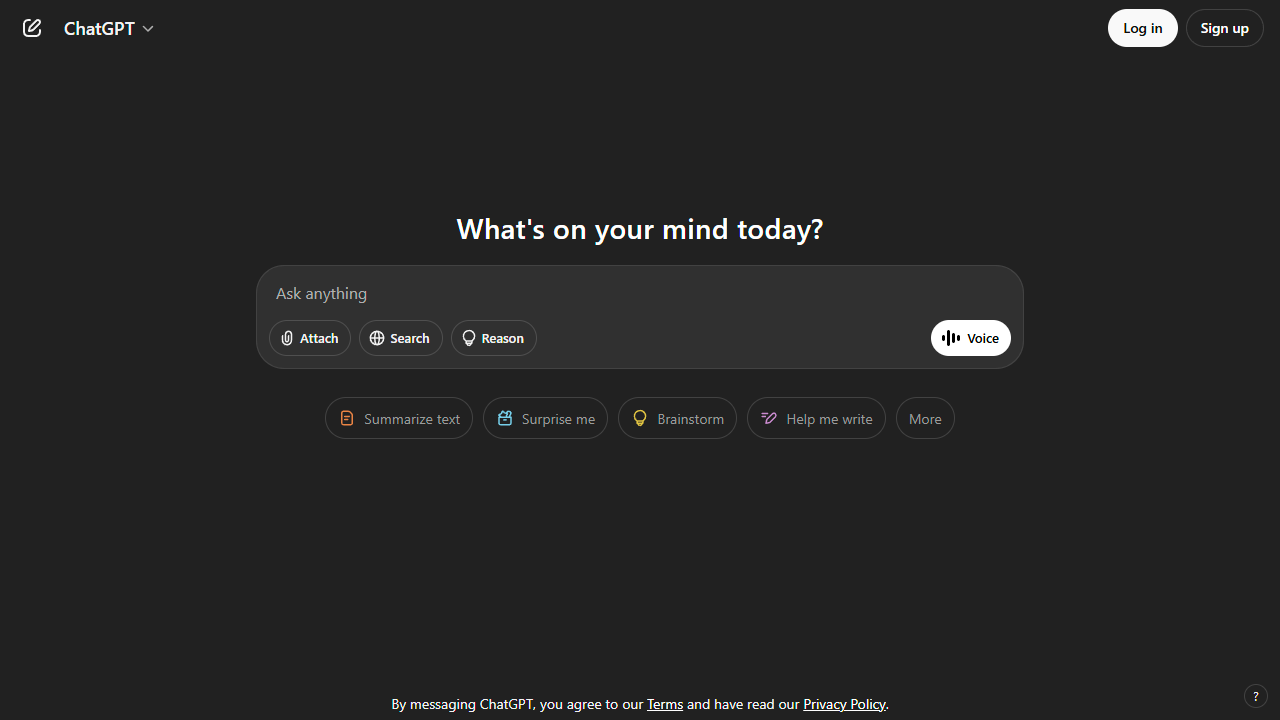
(Crédito: OpenAI/PCMAG)
Chatgpt está disponible en otros lugares, Como a través de Siri. Como se mencionó, puede acceder a Gemini en las aplicaciones de Google, como el calendario, Documento, ConducirGmail, Mapas, Mantener, FotosSábanas, y Música de YouTube. Tanto los modelos de Chatgpt como Gemini también aparecen en sitios como la perplejidad. Sin embargo, obtiene la mayor cantidad de funciones de estos chatbots en sus aplicaciones y portales web dedicados.
Las interfaces de ambos chatbots son en gran medida consistentes en todas las plataformas. Son fáciles de usar y no lo abruman con opciones y alternar. ChatGPT tiene algunas configuraciones más para jugar, como la capacidad de ajustar su personalidad, mientras que la profunda interfaz de investigación de Gemini hace un mejor uso de los bienes inmuebles de pantalla.
Ganador: empate
Modelos de IA
ChatGPT tiene dos series primarias de modelos, la serie 4 (su línea de conversación, insignia) y la Serie O (su compleja línea de razonamiento). Gemini ofrece de manera similar una serie Flash de uso general y una serie Pro para tareas más complicadas.
Los últimos modelos de Chatgpt son O3 y O4-Mini, y los últimos de Gemini son 2.5 Flash y 2.5 Pro. Fuera de la codificación o la resolución de una ecuación, pasará la mayor parte de su tiempo usando los modelos de la serie 4-Series y Flash. A continuación, puede ver cómo funcionan estos modelos en una variedad de tareas. Qué modelo es mejor depende realmente de lo que quieras hacer.
Ganador: empate
Búsqueda web
ChatGPT y Gemini pueden buscar información actualizada en la web con facilidad. Sin embargo, ChatGPT presenta mosaicos de artículos en la parte inferior de sus respuestas para una lectura adicional, tiene un excelente abastecimiento que facilita la vinculación de reclamos con evidencia, incluye imágenes en las respuestas cuando es relevante y, a menudo, proporciona más detalles en respuesta. Gemini no muestra nombres de fuente y títulos de artículos completos, e incluye mosaicos e imágenes de artículos solo cuando usa el modo AI de Google. El abastecimiento en este modo es aún menos robusto; Google relega las fuentes a los caretes que se pueden hacer clic que no resaltan las partes relevantes de su respuesta.
Como parte de sus experiencias de búsqueda en la web, ChatGPT y Gemini pueden ayudarlo a comprar. Si solicita consejos de compra, ambos presentan mosaicos haciendo clic en enlaces a los minoristas. Sin embargo, Gemini generalmente sugiere mejores productos y tiene una característica única en la que puede cargar una imagen tuya para probar digitalmente la ropa antes de comprar.
Ganador: chatgpt
Investigación profunda
ChatGPT y Gemini pueden generar informes que tienen docenas de páginas e incluyen más de 50 fuentes sobre cualquier tema. La mayor diferencia entre los dos se reduce al abastecimiento. Gemini a menudo cita más fuentes que CHATGPT, pero maneja el abastecimiento en informes de investigación profunda de la misma manera que lo hace en la búsqueda en modo AI, lo que significa caretas que se puede hacer clic sin destacados en el texto. Debido a que es más difícil conectar las afirmaciones en los informes de Géminis a fuentes reales, es más difícil creerles. El abastecimiento claro de ChatGPT con destacados en el texto es más fácil de confiar. Sin embargo, Gemini tiene algunas características de calidad de vida en ChatGPT, como la capacidad de exportar informes formateados correctamente a Google Docs con un solo clic. Su tono también es diferente. Los informes de ChatGPT se leen como publicaciones de foro elaboradas, mientras que los informes de Gemini se leen como documentos académicos.
Ganador: chatgpt
Generación de imágenes
La generación de imágenes de ChatGPT impresiona independientemente de lo que solicite, incluso las indicaciones complejas para paneles o diagramas cómicos. No es perfecto, pero los errores y la distorsión son mínimos. Gemini genera imágenes visualmente atractivas más rápido que ChatGPT, pero rutinariamente incluyen errores y distorsión notables. Con indicaciones complicadas, especialmente diagramas, Gemini produjo resultados sin sentido en las pruebas.
Arriba, puede ver cómo ChatGPT (primera diapositiva) y Géminis (segunda diapositiva) les fue con el siguiente mensaje: “Genere una imagen de un estudio de moda con una decoración simple y rústica que contrasta con el espacio más agradable. Incluya un sofá marrón y paredes de ladrillo”. La imagen de ChatGPT limita los problemas al detalle fino en las hojas de sus plantas y texto en su libro, mientras que la imagen de Gemini muestra problemas más notables en su tubo de cordón y lámpara.
Ganador: chatgpt
¡Obtenga nuestras mejores historias!

Toda la última tecnología, probada por nuestros expertos
Regístrese en el boletín de informes de laboratorio para recibir las últimas revisiones de productos de PCMAG, comprar asesoramiento e ideas.
Al hacer clic en Registrarme, confirma que tiene más de 16 años y acepta nuestros Términos de uso y Política de privacidad.
¡Gracias por registrarse!
Su suscripción ha sido confirmada. ¡Esté atento a su bandeja de entrada!
Generación de videos
La generación de videos de Gemini es la mejor de su clase, especialmente porque ChatGPT no puede igualar su capacidad para producir audio acompañante. Actualmente, Google bloquea el último modelo de generación de videos de Gemini, VEO 3, detrás del costoso plan AI Ultra, pero obtienes más videos realistas que con ChatGPT. Gemini también tiene otras características que ChatGPT no, como la herramienta Flow Filmmaker, que le permite extender los clips generados y el animador AI Whisk, que le permite animar imágenes fijas. Sin embargo, tenga en cuenta que incluso con VEO 3, aún necesita generar videos varias veces para obtener un gran resultado.
En el ejemplo anterior, solicité a ChatGPT y Gemini a mostrarme un solucionador de cubos de Rubik Rubik que resuelva un cubo. La persona en el video de Géminis se ve muy bien, y el audio acompañante es competente. Al final, hay una buena atención al detalle con el marco que se desplaza, simulando la detención de una grabación de selfies. Mientras tanto, Chatgpt luchó con su cubo, distorsionándolo en gran medida.
Ganador: Géminis
Procesamiento de archivos
Comprender los archivos es una fortaleza de ChatGPT y Gemini. Ya sea que desee que respondan preguntas sobre un manual, editen un currículum o le informen algo sobre una imagen, ninguno decepciona. Sin embargo, ChatGPT tiene la ventaja sobre Gemini, ya que ofrece un reconocimiento de imagen ligeramente mejor y respuestas más detalladas cuando pregunta sobre los archivos cargados. Ambos chatbots todavía a veces inventan citas de documentos proporcionados o malinterpretan las imágenes, así que asegúrese de verificar sus resultados.
Ganador: chatgpt
Escritura creativa
Chatgpt y Gemini pueden generar poemas, obras, historias y más competentes. CHATGPT, sin embargo, se destaca entre los dos debido a cuán únicas son sus respuestas y qué tan bien responde a las indicaciones. Las respuestas de Gemini pueden sentirse repetitivas si no calibra cuidadosamente sus solicitudes, y no siempre sigue todas las instrucciones a la carta.
En el ejemplo anterior, solicité ChatGPT (primera diapositiva) y Gemini (segunda diapositiva) con lo siguiente: “Sin hacer referencia a nada en su memoria o respuestas anteriores, quiero que me escriba un poema de verso gratuito. Preste atención especial a la capitalización, enjambment, ruptura de línea y puntuación. Dado que es un verso libre, no quiero un medidor familiar o un esquema de retiro de la rima, pero quiero que tenga un estilo de coohes. ChatGPT logró entregar lo que pedí en el aviso, y eso era distinto de las generaciones anteriores. Gemini tuvo problemas para generar un poema que incorporó cualquier cosa más allá de las comas y los períodos, y su poema anterior se lee de manera muy similar a un poema que generó antes.
Recomendado por nuestros editores
Ganador: chatgpt
Razonamiento complejo
Los modelos de razonamiento complejos de Chatgpt y Gemini pueden manejar preguntas de informática, matemáticas y física con facilidad, así como mostrar de manera competente su trabajo. En las pruebas, ChatGPT dio respuestas correctas un poco más a menudo que Gemini, pero su rendimiento es bastante similar. Ambos chatbots pueden y le darán respuestas incorrectas, por lo que verificar su trabajo aún es vital si está haciendo algo importante o tratando de aprender un concepto.
Ganador: chatgpt
Integración
ChatGPT no tiene integraciones significativas, mientras que las integraciones de Gemini son una característica definitoria. Ya sea que desee obtener ayuda para editar un ensayo en Google Docs, comparta una pestaña Chrome para hacer una pregunta, pruebe una nueva lista de reproducción de música de YouTube personalizada para su gusto o desbloquee ideas personales en Gmail, Gemini puede hacer todo y mucho más. Es difícil subestimar cuán integrales y poderosas son realmente las integraciones de Géminis.
Ganador: Géminis
Asistentes de IA
ChatGPT tiene GPT personalizados, y Gemini tiene gemas. Ambos son asistentes de IA personalizables. Tampoco es una gran actualización sobre hablar directamente con los chatbots, pero los GPT personalizados de terceros agregan una nueva funcionalidad, como el fácil acceso a Canva para editar imágenes generadas. Mientras tanto, terceros no pueden crear gemas, y no puedes compartirlas. Puede permitir que los GPT personalizados accedan a la información externa o tomen acciones externas, pero las GEM no tienen una funcionalidad similar.
Ganador: chatgpt
Contexto Windows y límites de uso
La ventana de contexto de ChatGPT sube a 128,000 tokens en sus planes de nivel superior, y todos los planes tienen límites de uso dinámicos basados en la carga del servidor. Géminis, por otro lado, tiene una ventana de contexto de 1,000,000 token. Google no está demasiado claro en los límites de uso exactos para Gemini, pero también son dinámicos dependiendo de la carga del servidor. Anecdóticamente, no pude alcanzar los límites de uso usando los planes pagados de Chatgpt o Gemini, pero es mucho más fácil hacerlo con los planes gratuitos.
Ganador: Géminis
Privacidad
La privacidad en Chatgpt y Gemini es una bolsa mixta. Ambos recopilan cantidades significativas de datos, incluidos todos sus chats, y usan esos datos para capacitar a sus modelos de IA de forma predeterminada. Sin embargo, ambos le dan la opción de apagar el entrenamiento. Google al menos no recopila y usa datos de Gemini para fines de capacitación en aplicaciones de espacio de trabajo, como Gmail, de forma predeterminada. ChatGPT y Gemini también prometen no vender sus datos o usarlos para la orientación de anuncios, pero Google y OpenAI tienen historias sórdidas cuando se trata de hacks, filtraciones y diversos fechorías digitales, por lo que recomiendo no compartir nada demasiado sensible.
Ganador: empate




















































































































































































































































































































































































































































































































































































































































































































































































































































































































































































































































































































































































































































































-
 Startups2 años ago
Remove.bg: La Revolución en la Edición de Imágenes que Debes Conocer
-
 Tutoriales2 años ago
Cómo Comenzar a Utilizar ChatGPT: Una Guía Completa para Principiantes
-
 Startups2 años ago
Deepgram: Revolucionando el Reconocimiento de Voz con IA
-
 Startups2 años ago
Startups de IA en EE.UU. que han recaudado más de $100M en 2024
-
 Recursos2 años ago
Cómo Empezar con Popai.pro: Tu Espacio Personal de IA – Guía Completa, Instalación, Versiones y Precios
-
 Recursos2 años ago
Perplexity aplicado al Marketing Digital y Estrategias SEO
-
 Estudiar IA2 años ago
Curso de Inteligencia Artificial Aplicada de 4Geeks Academy 2024
-
 Noticias2 años ago
Dos periodistas octogenarios deman a ChatGPT por robar su trabajo